
Users spend less time deciding when to switch, where to switch, or which routing path makes more sense for a given target.
See how it works
Smart routing
Clash smart routing makes routing behavior easier to manage.
Clash smart routing combines policy logic, node switching, and connection control into a more coherent routing workflow. Instead of relying on repeated manual decisions, it helps shape traffic behavior in a way that stays easier to follow, easier to adjust, and easier to trust over time.
The value of smart routing is not only whether a connection works, but whether routing decisions stay clear and predictable across different targets, devices, and daily scenarios.
Why smart routing matters
Routing becomes more valuable when users no longer need to constantly decide which node to switch to, which mode to use, or what rule should apply next. A stronger routing model reduces decision load and makes the whole connection workflow more consistent.
What matters over time is not one successful connection, but whether routing stays smooth, readable, and manageable across repeated daily use.
See the use casesSmart routing is a clearer way to organize routing behavior for long-term use.
Basic mode stays closer to manual control, while smart routing uses policies and context to shape traffic behavior more naturally.
Policy logic, switching, and control work as one system
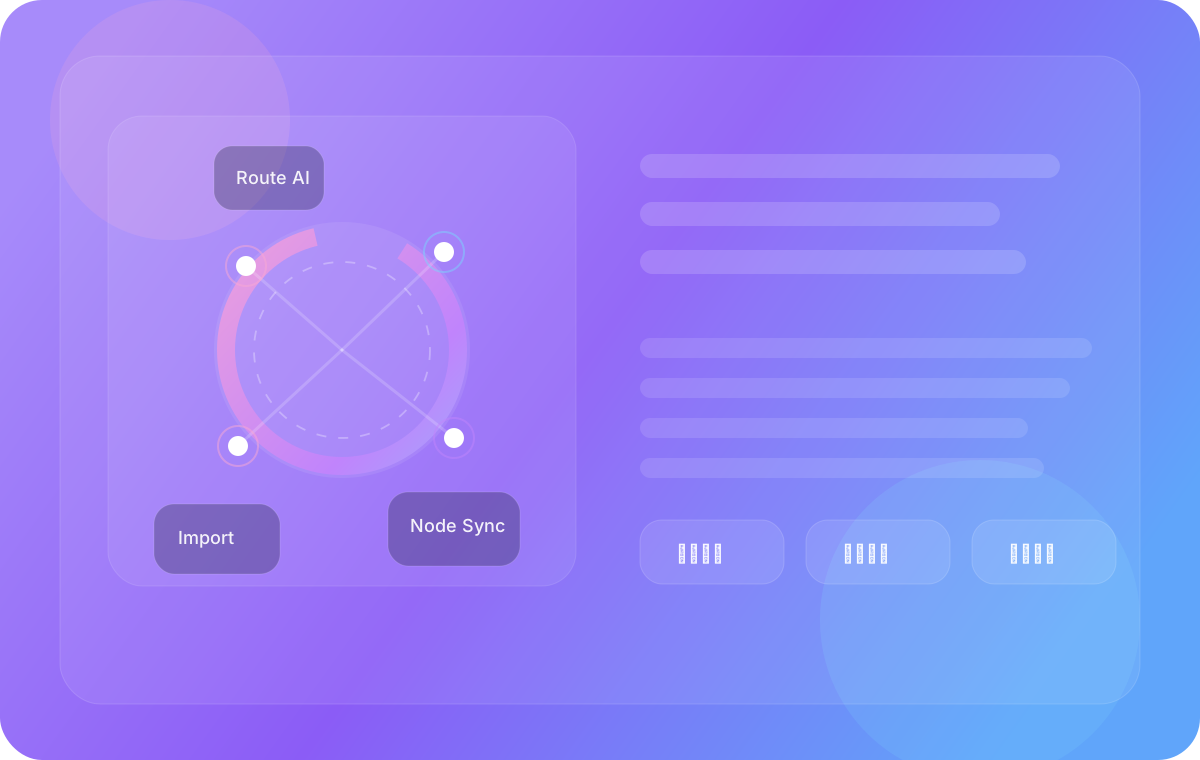
Smart routing is not a collection of unrelated tools. Policy logic decides how traffic is handled, node switching affects how routes adapt, and connection control makes behavior easier to understand and adjust.
Policy routing
Match different traffic targets with more appropriate routing rules so behavior stays closer to real usage patterns.
See routing logicNode switching
Switch between nodes and routing paths more naturally, with less repeated manual intervention.
See best-fit scenesConnection control
Make status, rule behavior, and routing results easier to observe and easier to adjust over time.
See related FAQHow Clash smart routing works
Routing behavior usually moves through four parts: identifying traffic, matching a rule, choosing a route, and returning clear feedback on what happened.
Identify the target
Traffic is recognized first so later routing decisions start from a more useful baseline.
Match the routing rule
The target is assigned to a better-fitting policy path, reducing repeated manual switching.
Choose the better path
Node quality and routing context shape a more stable and practical traffic path.
Return clearer feedback
Status, route behavior, and switching results are surfaced more clearly, making the whole system easier to trust.
Once users understand how routing behavior is formed, the value of the feature becomes easier to judge and easier to trust.
Smart routing matters most when repeated switching, routing choices, and daily control need to stay manageable over time.
Where smart routing matters most
Smart routing becomes more valuable when routing behavior stays active across multiple targets, devices, or longer daily sessions.
Cross-border work and multi-service collaboration
When workflows involve overseas tools, multiple service targets, and more complex access paths, smart routing reduces decision load and keeps the experience more continuous.
Multi-device switching and longer sessions
When users move between desktop and mobile, or stay connected for longer periods, clearer routing logic matters more than one moment of raw speed.
Faster usable state
Well suited to users who want less learning cost and a quicker path into real usage.
Stable daily control
Best for users who are more sensitive to switching quality, connection stability, and predictable daily use.
Frequently Asked Questions
These questions focus on smart routing itself, helping users understand what it does and where it matters most.
What is smart routing?
It is a clearer way to manage policy logic and traffic distribution so different targets can follow more appropriate routing behavior.
How is it different from a basic connection mode?
The difference is not only whether a connection succeeds, but whether repeated switching becomes easier, clearer, and more stable over time.
Is it suitable for beginners?
Yes. Good smart routing does not add complexity to the user. It hides more of that complexity behind a clearer product flow.
Which scenarios benefit the most?
Cross-border work, multi-service access, multi-device workflows, and long-running usage all benefit more from smart routing logic.
See where routing fits next
If you already understand the feature, the next step is to continue to download options or review configuration structure.